Troubleshooting community setups: see the compatibility result using temperature, pH, GH/KH, adult size, behavior, schooling needs, and predator/prey rules.
Conditional
GloFish Tetra and Guppy compatibility verdict
Short answer: Sometimes, but only if the warnings are handled. Plan for at least 20 gallons before adjusting for group size, filtration, and aquascape layout.
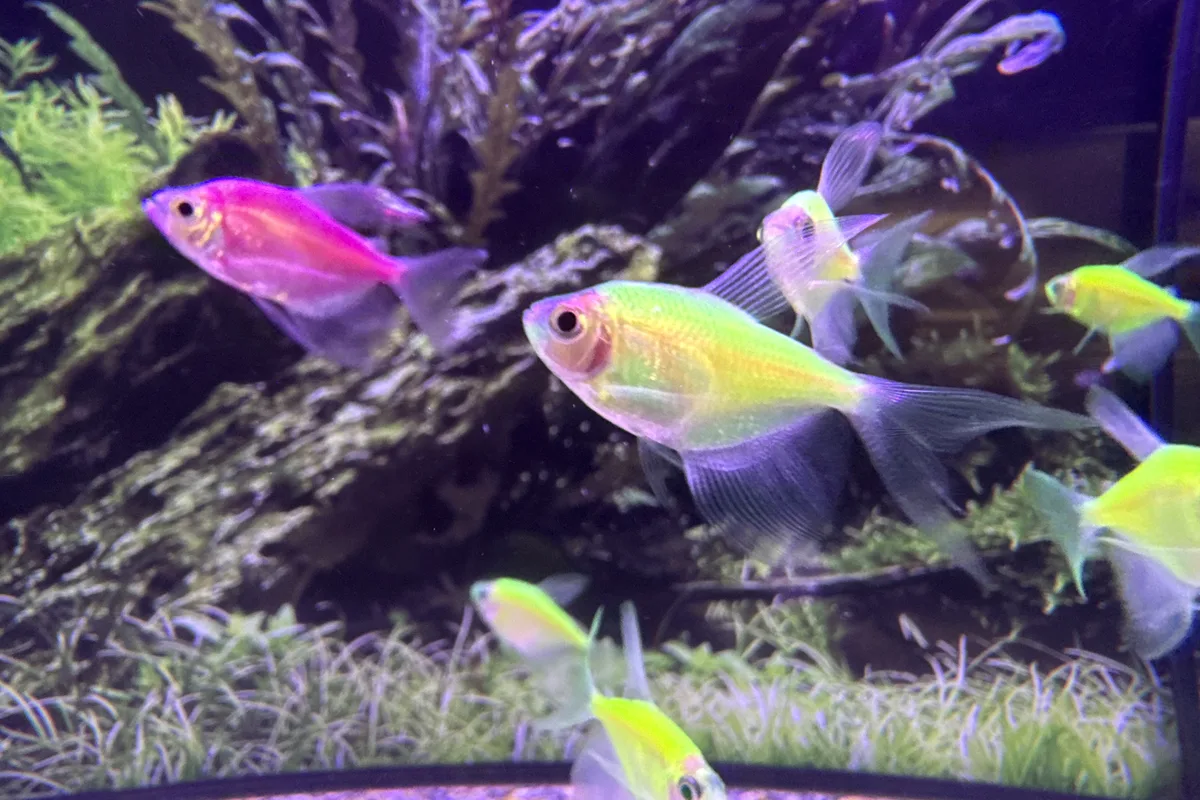
fin_nipping_riskGloFish Tetra can sometimes share a tank with guppy, but skirt tetra activity and fin-nipping risk make long fins or slow fish a caution case.
yellow
Caution, conditional match
Data confidence: high
fin_nipping_riskGloFish Tetra can sometimes share a tank with guppy, but skirt tetra activity and fin-nipping risk make long fins or slow fish a caution case.
This verdict assumes normal social groups, not one stressed specimen. GloFish Tetra should be planned at 6+; Guppy should be planned at 3+ before judging long-term compatibility.
Fry safety
If livebearer fry matter, assume most community fish will eat newborn fry unless the tank has dense plants, floating cover, and a separate grow-out plan.
Real-World Experience
Textbook score vs observed behavior
A compatibility score checks adult size, temperature, pH, hardness, temperament, and tank volume. Real tanks add variables the score cannot see directly: feeding aggression, cave ownership, plant cover, and whether fish can constantly see each other.
Line-of-sight and swim-zone pressure
GloFish Tetra and Guppy use different swim zones, but feeding time and open sightlines can still change behavior. Start with at least 20 gallons, then use hardscape, tall plants, and separated feeding zones to reduce chasing before it becomes a pattern.
Water parameter comparison
GloFish Tetra temperature72-80F
Guppy temperature72-82F
GloFish Tetra pH6-7.8
Guppy pH7-8.2
GloFish Tetra GH4-18 dGH
Guppy GH8-20 dGH
Minimum tank20 gal
Last updated2026-06-11
Confidence: high. Aggression, predator/prey, shrimp risk, schooling, and tank size rules are evaluated from curated freshwater attributes.
Troubleshooting aggression between GloFish Tetra and Guppy
Problems can happen even when the gallon number is technically adequate. Check feeding order, repeated access to the same cave or plant mass, school size, and whether the aquascape gives either fish a direct line of sight across the whole tank.
How to break line-of-sight to reduce aggression
Use tall plants, rock piles, driftwood, and separate feeding stations so a dominant fish cannot patrol one open lane from end to end.